


Steven Spielberg’s films are great for many reasons, and that’s in part due to the director’s ambition. With that in mind, he – and Universal Pictures – certainly “spared no expense” when crafting 1993’s Jurassic Park. Based on Michael Crichton’s acclaimed novel of the same name, the film is not only a showcase of prehistoric thrills and chills but also one of the earliest instances of what could truly be done with digital effects. Spielberg and co. ultimately made a great film but, early on, even he was naive when it came to one element.
Over the years, the cast and crew have discussed their experiences on the production and just how much of an undertaking it was. SFX Magazine on CinemaBlend previously released a retrospective on the film, which included comments from late visual effects icon Stan Winston. The Oscar winner recalled Spielberg coming into the project with a lot of ideas from a filmmaking standpoint. One desire Spielberg had was actually inspired by 1986’s Aliens (for which Winston won an Oscar) but, per Winston, that request wasn’t feasible:
Steven figured that if we could build a 14-foot-tall Alien Queen, we’d be able to build a 20-foot-tall T-Rex. That turned out to be a somewhat naive assumption. There was a big difference between building that Alien Queen and building a full-size dinosaur. There were no muscles, no flesh, and there was no real weight to it. The Alien Queen also didn’t have to look like a real, organic animal because it was a fictional character – so there was nothing in real life to compare it to.
Winston’s reasoning is sound, as the film’s tyrannosaurus rex would need to be based on the look of the actual dinosaur. Conversely, the massive Alien Queen featured in James Cameron’s 1986 sci-fi thriller isn’t real, so Winston and co. could take liberties with the look to make it easier for their purposes. Still, I can’t criticize Spielberg for simply wanting to provide a practical element for his blockbuster. This, of course, all begs the question of how Spielberg, Winston and their colleagues ended up proceeding.
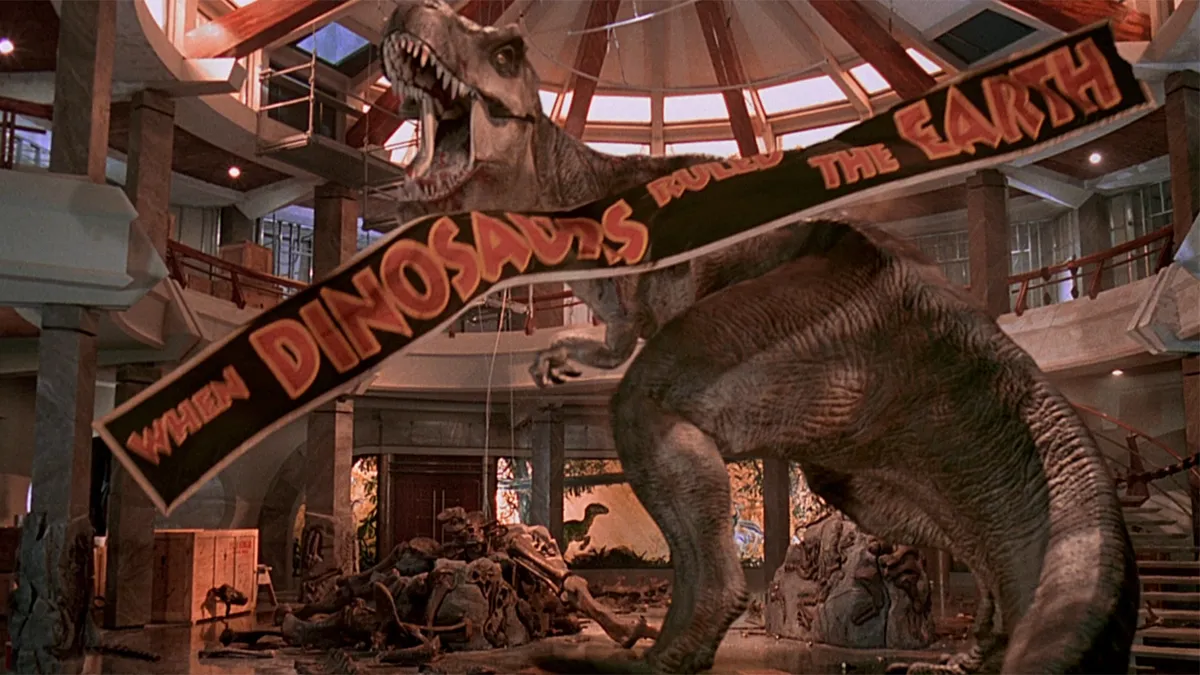
For the T-Rex, Winston and his team ultimately decided to create a one-fifth scale clay model of the imposing dinosaur, and they then turned it into a puppet. After that, the model was scanned by the folks at Industrial Light & Magic for the purposes of laying out the film’s visual effects shots. The plan may not have preceded the way Spielberg initially hoped, but it’s hard to argue with the results that ultimately materialized on the big screen.

The Most Important Elements Of A Good Jurassic Park Movie, According To The Rebirth Cast
It’s been interesting to hear behind-the-scenes facts about Jurassic Park over the years, as they provide keen insight into the finer details of crafting the beloved blockbuster. Some of the most interesting pieces of lore included a massive hurricane hitting Hawaii as the stars cast and crew were filming and the fact that Spielberg made dinosaur noises on set to try and make the experience more visceral for the cast. The director’s sound-based efforts in that regard actually contributed to Laura Dern’s belief that the finished film would be “horrible.”
But, over 30 years (and billions of dollars) later, the Jurassic Park/World franchise is still flourishing, thanks in great part to how the OG flick laid that foundation. Moviegoers should be forever grateful to Spielberg and his collaborators for all the hard work they put in on that movie. Of course, Stan Winston deserves credit as well for tempering Spielberg’s expectations regarding what was actually viable for the film as far as that T-Rex went.
Steven Spielberg may have any Jurassic films on the docket (as far as we know), but he does have a new movie, Disclosure Day, being released amid the 2026 movie schedule. That UFO film – which is written by Jurassic Park’s David Koepp – opens in theaters on June 12.

