


Writing about Edgar Wright's adaptation of The Running Man here on CinemaBlend, I haven't exactly been shy in sharing my feelings about the ending: it was a main subject in both my review of the movie and my full analysis of the final scenes was headlined "The Running Man Massively Changes The Ending Of Stephen King's Story, And WTF Was That?" In short, it plays as a major cop out, with dark revelations and events from the source material replaced with illogical Hollywood pablum. I was extremely dissatisfied by the adaptation when I saw it in theaters last fall, and if I'm being totally honest, my feelings have only further steered toward the negative reading the director's latest comments.
Wright's explanation for the controversial ending of The Running Man is the lead development featured in this week's edition of The King Beat, but it's not the lone story from looking back at the last seven days in the world of Stephen King, as a new attempt to ban one of the author's books has caught my eye as being particularly ironic. There's a lot to discuss, so let's dig in!

Edgar Wright's Latest Comments About The Running Man Ending Do Nothing To Make Me Feel Better About The Flawed Stephen King Adaptation
To ever so briefly recap the end of Edgar Wright's The Running Man: Ben Richards (Glen Powell) is left utterly bereft when he learns that his wife and child have been killed while he was competing on the titular game show. When he rejects an offer to become the new lead hunter for Dan Killian (Josh Brolin), the Network takes over the navigation of the plane he's on, and sets up a narrative to label Richards as a thwarted terrorist. Instead of a bleak ending matching the Stephen King book, however, a YouTube-esque video explains that Richards was able to safely eject, a brief supermarket scene reunites the protagonist with his still-alive family; and Richards leads an assault on the set of The Running Man to kill Killian.
In thinking about the terrible final scenes of the movie in the last few months, I've tried to reason out why it's so bad – and my gut told me it was about studio interference and/or test screenings. The movie was produced with a substantial $110 million budget (per Variety), and I imagined that some calculus was done that determined limits to its box office potential with a dark ending. That, or early cuts previewed during post-production upset too many people, forcing reshoots and changes.
My gut was wrong: Edgar Wright takes personal responsibility for the changes to the source material. And while I understand that the movie couldn't directly adapt the ending from the book because of how it retroactively echoes the horrors of September 11, 2001, I am disappointed to hear his explanation for reversing the deaths of Ben Richards' wife and daughter.
New commentary from the filmmaker about The Running Man is featured in the latest issue of Empire, and Wright specifically digs into the significant changes that the film makes from Stephen King's book (first published in 1982 under the pseudonym Richard Bachman). Discussing the fates of Sheila and Cathy Richards, he says that the first crack at the script featured the characters being killed for real, but he didn't have the stomach for the material in subsequent drafts. The writer/director told the magazine,
In the original draft, we did do the thing where Sheila and Cathy passed away. But to be honest, as soon as you cast actors in those roles, I don’t think I could have done it, even if it had been in the script. Like, this is too brutal.
Here's the problem with that: "too brutal" is what he signed up for. In the run-up to the release of the movie, Edgar Wright explained that his interest in the project began when he was a teenager and recognized that the 1987 film starring Arnold Schwarzenegger is barely a reflection of the book on which it's based. Being a big fan of the novel, he wanted to make a more faithful adaptation, which he very much succeeded in doing… up until the final scenes.
With the book, Stephen King didn't just spit out an edgy ending. The darkness is fitting because the journey Ben Richards goes on through the story exposes the horrors of his fascistic world, full of lies, violence, pollution, corruption, and propaganda, and he is broken by it. Pop culture constantly feeds us hopeful and optimistic ends to these kinds of stories, but it's an emotional and powerful thing to see a hero shatter – as director Francis Lawrence and screenwriter J.T. Mollner perfectly proved last year with the changed but phenomenally effective ending of The Long Walk.
Wright added that there was never a plan to have Ben Richards purposefully fly a plane into the Network headquarters (something he first confirmed more than a month before the movie's theatrical release), but he also explained that the ending was always going to have Richard's journey have a specific impact on his world:
We wanted him to be the spark of the revolution. That was in the first draft. We were never going to do the ending from the book. It obviously has real-life parallels with a horrific real-life tragedy. We thought it’d be in incredibly poor taste to evoke 9/11. That was not ever a discussion.
Again, I get avoiding having the film generate any 9/11 comparisons, but I also think the movie is misguided in the "spark of revolution" arena. That is something that The Running Man could have accomplished without faking the deaths of Ben, Sheila, and Cathy Richards: they could have been remembered as martyrs in a new movement led by The Apostle (Daniel Ezra) – eliminating the "Hollywood" stink that is all over the movie we ultimately got.
It's clear that Edgar Wright remains very proud of the movie he made, and while it didn't ultimately perform well in theaters (it finished its worldwide theatrical run earning $68.6 million), he believes that it will ultimately find an audience – which is something that he has personally experienced before in his career. Said the filmmaker,
I’ve been in this position before. Scott Pilgrim didn’t do well on its initial release, and over time has become a cult movie, or even a catalogue title for Universal. I feel like The World’s End, the perception of it has changed over time. I’m proud of the movie. There’s a lot to talk about, and there is a life beyond the opening weekend.
Should you want to reassess The Running Man, the movie is currently available to stream with a Paramount Plus subscription, or if you're a physical media fan/looking to build the ultimate Stephen King collection, you can purchase the film on 4K UHD, Blu-ray and DVD.
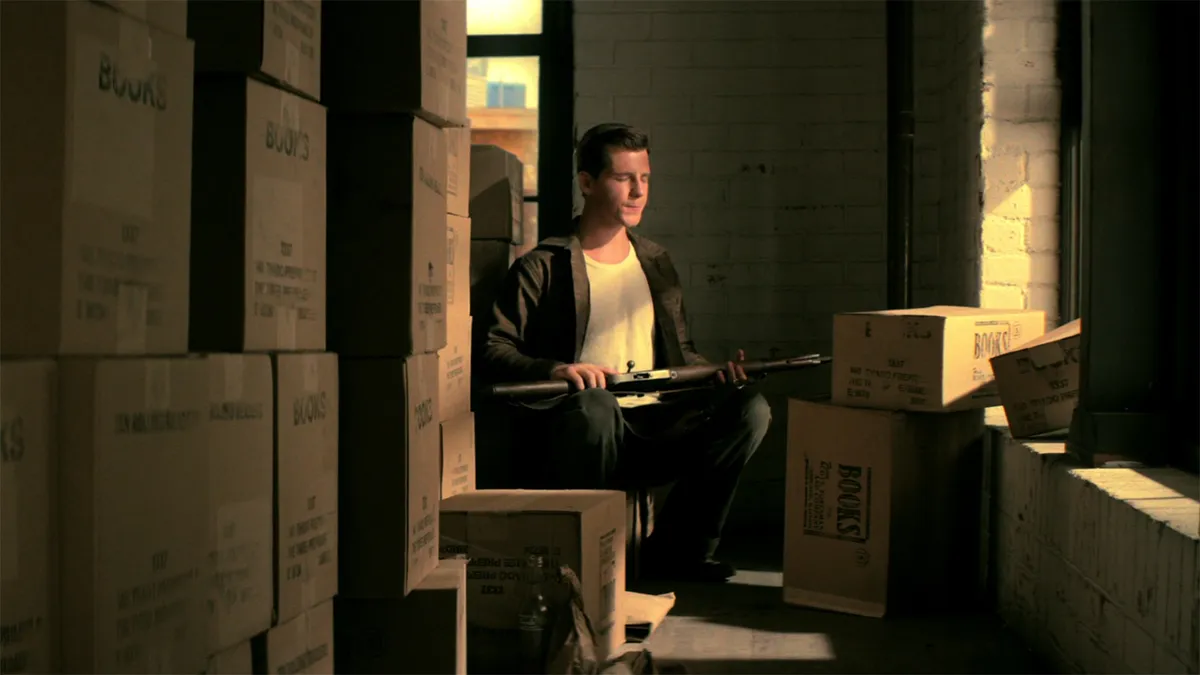
It's Hard Not To See An Extreme Irony In A New Effort To Ban One Of Stephen King's Books
Stephen King is no stranger to having his books banned in various United States school districts. It's something that has been happening for decades, and King has been known to take it as a point of pride when it happens because its recognition of how his work challenges readers with delicate and taboo subject matter, and he encourages readers to seek out those titles when they get taken out of libraries. Generally speaking, I find the bans to be both awful and ridiculous, but recent news out of Jacksonville, Florida has caught my eye because of an effort to remove a specific title: 11.22.63.
Reporting about the initiative comes from WJXT, which says that King's 2011 novel is being challenged along with Vanishing Acts and The Pact by author Jodi Picoult. The news source doesn't specifically explain why 11.22.63 is being targeted, but I can't help but find it extremely ironic given that the work is a passionate love letter dedicated to teachers and education.
The titular date is a reference to the assassination of President John F. Kennedy, as the plot of the book sees a protagonist Jake Epping travel back in time to stop Lee Harvey Oswald and potentially create a better future. But Jake is limited to traveling back to 1958, and that necessitates him forging a life for himself in the past until the big day comes. A teacher from his own time, he finds employment as a teacher in the past, and the impact that he has on the lives of his students is magical. There are sequences of sex and violence in the book, but none that outweigh the clear affection that King has for people who dedicate their lives to fostering young generations – and banning that kind of material from schools is straight-up preposterous.
That brings us to the end of this week's edition of The King Beat, but as ever, the publication of this feature means that we are now exactly seven days away from the next, as I'm happy to bring you all of the latest news from the world of Stephen King every Thursday here on CinemaBlend. And while you wait for new stuff, you can dive into the old stuff with my series Adapting Stephen King – an exploration of the long history of King stories in film and television.

