


The SNL writers played a prank on host Ryan Gosling this week. In between dress rehearsal and the live broadcast, they switched the contents of multiple notes he had to read out loud. They did the same thing to cast member Ashley Padilla and assumedly, her co-star Mikey Day. The last minute switcheroo led to a lot of mid-sketch laughing and a fun viral moment. It also provided roughly the one thousandth piece of evidence that something fans think they know about SNL is wrong.
There are few shows in the history of television that have been chronicled more extensively than Saturday Night Live. Numerous books and documentaries come out about the show every single year, and when you add that to the hundreds of interviews current and former cast members give, fans have a pretty good sense of what goes on behind the scenes at Studio 8H. They know how the production schedule works (at least when there aren’t last minute changes). They know what role the host plays in getting pitches approved, and they know what longtime showrunner Lorne Michaels tolerates and does not tolerate. Or at least they think they do.
I’m not saying fans haven’t gotten a sense of his taste over the years, but there’s this perception of him that he hates when cast members or hosts break character. He supposedly can’t stand when people laugh in the middle of sketches. I’m certainly not saying he’s encouraging people to belly laugh during every sketch, but there is a lot of evidence, especially in recent years, that he’s open, on occasion, to intentionally creating the conditions that make it more likely people will break character.
Let’s watch the sketch from last night and then talk about it as an example…
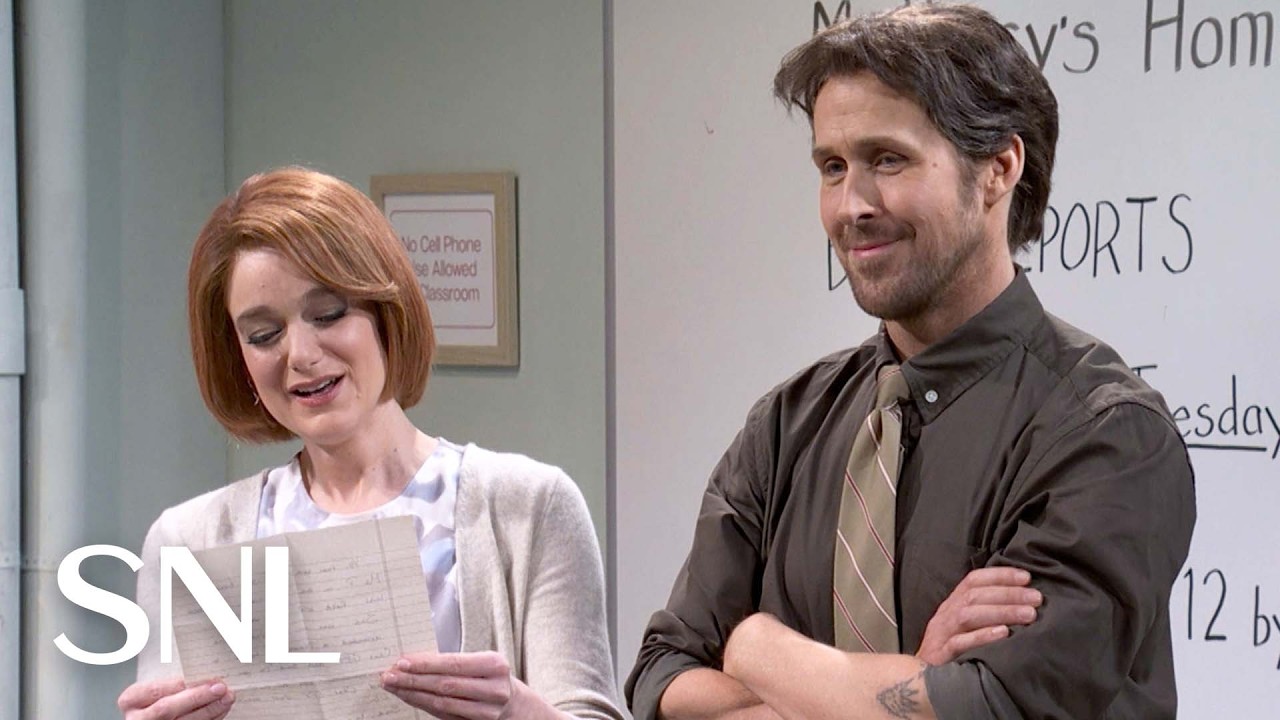
I’m not saying there’s not some humor to pull from a principal and a teacher reading embarrassing notes, but the entire goal of the sketch here was clearly to surprise Gosling and Padilla with some absolute nonsense they were not expecting. The whole point of this sketch was to make them laugh and perhaps to make Mikey Day laugh who also read a note, though he kept his composure a lot better than the other two.
The last time Gosling hosted, he, of course, went mega-viral alongside Day and Heidi Gardner for their Beavis And Butt-Head sketch, which led to the normally stone-faced Gardner losing any ability to control herself. The sketch was one of the most popular SNL has done in years, and there was a lot of talk afterwards about how Gosling has a habit of giggling during his SNL appearances. Clearly, the show decided to lean into that and try to create a similar moment.
That’s not the only example in recent years either. Perhaps the buzziest recurring sketches right now on SNL are the semi-annual joke swaps between Michael Che and Colin Jost. The entire premise of those sketches is that they haven’t seen the jokes they need to read ahead of time. That was also a huge part of what made the Stefan sketches work so well. It’s well known that John Mulaney, who conceived the character, would sometimes change the lines in between dress and the show to try and trip star Bill Hader up.
Saturday Night Live is a very organized and rehearsed show, at least for being recorded live. Michaels and company are very intentional about camera angles and line delivery. It is not a free-for-all out there. Cast members and the host are expected to hit their marks and deliver the lines as written, but this perception that the show doesn’t occasionally break those rules is wrong.
Beloved sketches like Debbie Downer and More Cowbell featured some element of cast members laughing or breaking character, and they’re spoken by everyone involved with great reverence. More than that, there are quite a few obvious examples of the show occasionally pushing people to break character by changing lines or conditions between dress rehearsal and the live show. Producers definitely push people to stay in character and stick to the script most of the time, but the perception that laughing mid-sketch is an unpardonable offense is wrong. The occasional break is not only tolerated, it’s clearly leaned into.
